
Fine & Micro Screens: Precision Stormwater Filtration for Advanced Rainwater Harvesting Systems
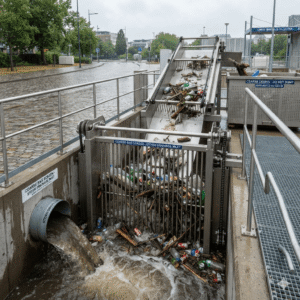
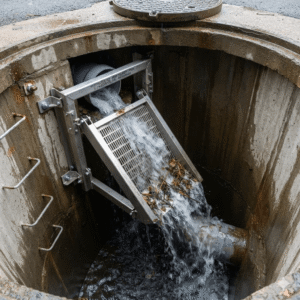
As modern civil infrastructure shifts toward sustainable ecological models, large-scale rainwater harvesting and stormwater reclamation have become vital components of water management. However, open surface runoff carries significant debris loads, including asphalt grit, broken twigs, organic foliage, and small micro-plastics. Our premium Fine & Micro Screens are custom-engineered to solve this heavy pre-treatment challenge. Functioning automatically at the headworks of retention underground vaults or cistern systems, these advanced micro strainers isolate fine particles before they settle into sludge layers inside your storage infrastructure.
Why Implement Our Rainwater Fine & Micro Filtering Screens?
- High-Velocity Flash Flood Tolerance: Designed with an optimized structural profile to maintain rapid hydraulic throughput during severe rainstorms without overflow risks.
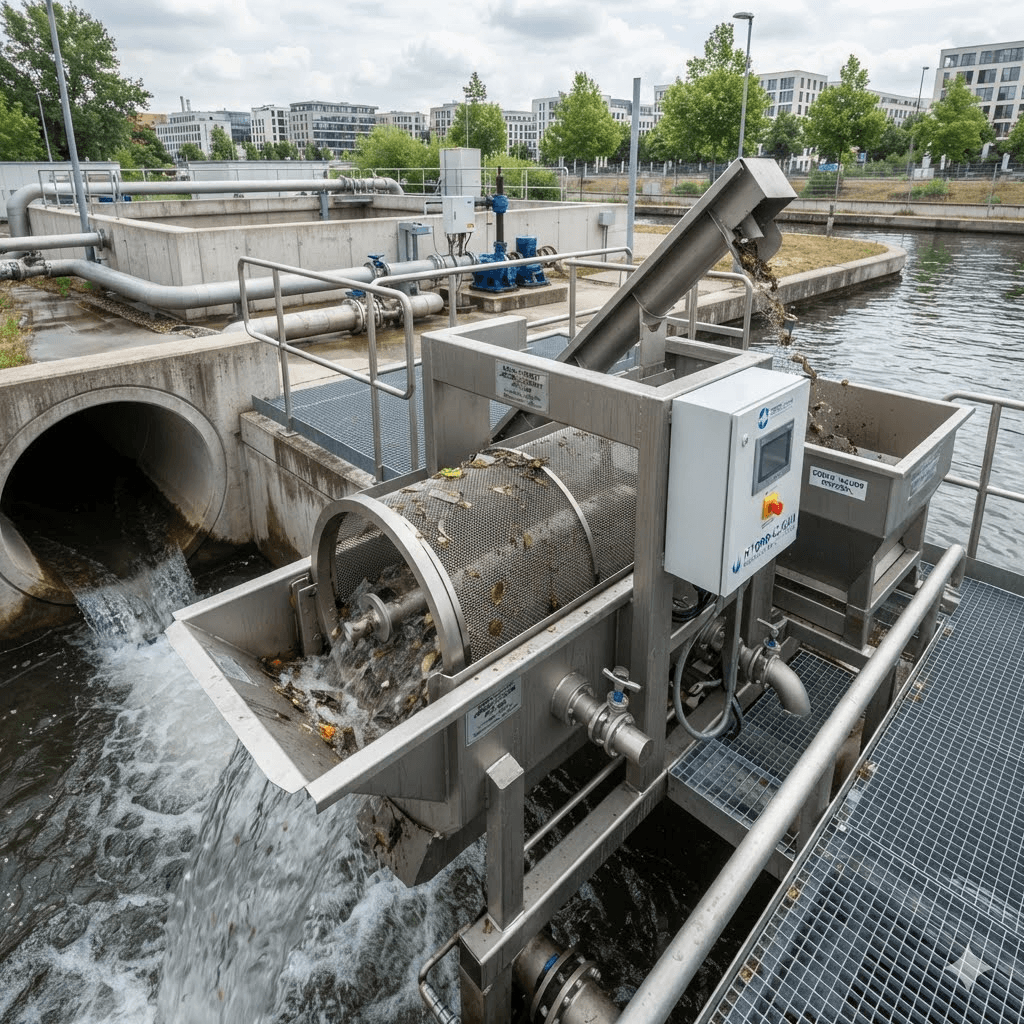
- Automated Leaf Clearing Jet Nozzles: High-pressure integrated backwash lines scour the screen face continuously, pushing sticky leaves and pine needles straight into the waste discharge chute.
- Premium Stainless Anti-Rust Passivation: Fabricated using premium-grade structural stainless steel to endure cyclic wet-and-dry weather exposures without oxidation.
- Seamless Civil Channel Matching: Frame geometries and installation angle metrics are tailored to line up perfectly within pre-cast concrete stormwater trenches.
Optimized Fluid Dynamics, Self-Cleaning Automation & Tank Protection
The core operating engineering of our stormwater micro screens addresses the irregular nature of weather patterns. During dry periods, filtration equipment sits idle; however, the initial “first flush” of a rainstorm introduces concentrated debris. Our rotary drum and mechanical step configurations utilize specialized stainless steel V-profile wedge wire or high-strength mesh loops. This geometrical approach ensures that fine sediment stays on the outer screen surface, preventing deep blinding from fibrous mud or decaying organic matter.
For municipal ecological parks, sustainable green building complexes, and commercial aquifer recharge wells, our filtration systems are equipped with smart automation. Utilizing a localized Siemens PLC terminal connected to hydrostatic water-level instruments, the mechanical components activate only when dynamic runoff triggers a specific level difference. This on-demand washing cycles saves processing water and electrical energy during minor drizzle events, while shifting automatically to continuous peak-speed operations during tropical monsoons to secure and filter every gallon of harvestable rainwater.
Technical Specifications Table
| Technical Parameter | Standard Specifications & Range Profiles | B2B Customization Depth |
|---|---|---|
| Filter Equipment Orientations | Inline Rotary Drum Filter, High-Volume Step Screen, Channel Mechanical Grid | Tailored to site drainage designs |
| Filtration Aperture Capacity | Fine Gap: 1mm, 2mm, 3mm, 5mm / Micro Mesh: 50μm, 100μm, 200μm, 300μm | Fully Customizable |
| Structural Metallurgy Grades | Standard Stainless Steel 304 (SS304), Marine Grade Stainless Steel 316L (SS316L) | Full material certs provided |
| Peak Hydraulic Processing Rate | From 20 m³/h up to 3500 m³/h per individual automated module unit | Scalable parallel modules available |
| Jet Spray Backwash Pressure | 0.35 – 0.55 MPa high-impact flat fan spray manifold tracking | Adjustable timing configuration |
| Automation Electronics Grade | IP65 Waterproof Stainless Enclosure, Siemens VFD, SCADA Modbus Interface | Custom electrical standard layouts |
Precision Engineering Packaging & Safe Ocean Container Logistics
Exporting global civil engineering machinery for municipal stormwater filtration requires robust industrial packaging. Fine rotary screens feature lightweight, high-diameter stainless drums, precision water manifolds, and sensitive PLC controller panels that must remain perfectly squared and protected against maritime environmental threats. Our logistics team handles bulk shipments with the highest level of care.
Every fully manufactured screening assembly is bolted down onto rigid custom-welded structural steel shipping runners inside heavy, fumigation-free solid plywood crates. Critical micro-mesh filtering components are wrapped with heavy impact-resistant sheets to absorb movement during ocean transit. Motor groups and local IP65 controls are packed with vapor-phase corrosion inhibitors and sealed inside vacuum aluminum wraps, ensuring your municipal infrastructure arrives safe, pristine, and ready for fast project integration.
Frequently Asked Questions (FAQ)
Q1: Why is an automated self-cleaning fine screen better than a static gravity basket filter for stormwater systems?
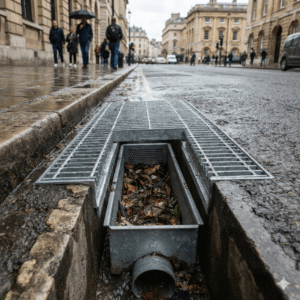
A1: Static gravity filters and basket screens clog rapidly when autumn leaves and plastic waste are swept down open drains by heavy rains. Once blinded, static filters block water flow, causing street-level flooding. Our automated fine screens feature continuous rotary drums or step mechanisms paired with high-pressure backwash sprays. They extract debris continuously while maintaining full hydraulic capacity, preventing localized flooding during intense storms.
Q2: What screen aperture size is recommended to protect downstream geocellular rainwater attenuation crates?
A2: To protect underground geocellular storm crates and modular infiltration tanks from sediment buildup, a fine wedge-wire gap of 1mm to 2mm is the industry standard. If your project involves direct water reuse for toilet flushing or irrigation, adding an integrated secondary micro-mesh stage down to 100μm will remove fine suspended silt and organic fibers, preventing nozzle clogging and extending the lifespan of your disinfection systems.
Q3: How does the system prevent freezing and handle cold-climate winter runoff or snowmelt?
A3: For municipal projects in cold climates like Northern Europe or North America, we upgrade our fine screens with heat-traced enclosure insulation jackets and automated air-purge blowdown lines for the backwash manifolds. This addition prevents residual washwater from freezing inside the nozzles between storm cycles, allowing the system to process winter snowmelt and road grit smoothly.
Q4: What data does your factory need to size a fine micro screen for a municipal sponge city contract?
A4: To size your equipment correctly, our engineering team requires: 1) Your peak expected storm design flow rate (L/s or m³/h), 2) The cross-sectional dimensions of your concrete intake channel, 3) Your target filtration rating (micron or mm), and 4) Your preferred material grade based on soil salinity. Our design office will provide complete structural CAD drawings and a detailed technical quote within 24 hours.
Request a Stormwater Fine & Micro Screens Technical Layout & Factory Price Quote
Are you an infrastructure civil engineer, rainwater harvesting distributor, municipal EPC contractor, or sponge city developer seeking an authorized high-capacity manufacturing partner? Send us your hydraulic flow calculations, installation footprints, and target mesh apertures. Our engineering team will supply an optimized system design blueprint and a wholesale quote within 24 hours.
Contact our B2B export engineering department today to receive an itemized wholesale pricing catalog, detailed engineering blueprints, and a complete physical sample box delivered directly to your corporate headquarters!